Дизайнеры светильников, инженеры по коммерческим светильникам, и специалисты по закупкам светодиодных модулей постоянно оценивают топологии источников света для оптимизации оптического распределения., тепловыделение, и стоимость сборки. Выбор между концентрированным направленным светом и мягким, непрерывное освещение области определяет, указывает ли инженер чип-на-плате (COB) массив или линейная печатная плата для поверхностного монтажа. Следовательно, производители светильников часто задают специалистам по компонентам освещения фундаментальный вопрос проектирования: “Каковы основные технические различия между модулем линейного светового двигателя и модулем COB?, и в каких сценариях архитектурного освещения следует указывать линейный модуль?”
Выбор неправильного светодиодного источника света для конструкции светильника создает серьезные оптические и тепловые проблемы.. Использование модулей COB для длительной непрерывной работы светильников приводит к появлению горячих точек., суровый свет, и сложные требования к вторичному диффузору. Наоборот, использование линейных решеток для узкого прожектора приводит к недостаточной мощности свечи центрального луча (ЦБКП). Понимание того, как индивидуальный модуль линейного светового двигателя отличается от массива COB плотностью света, пространственное распределение света, Механическая интеграция позволяет инженерам выбрать оптимальную светодиодную плату для любого коммерческого или архитектурного применения.. В этом техническом руководстве описаны оптические механизмы., структурные сравнения, идеальные сценарии применения, и рекомендации по закупкам для изготовления светодиодных модулей по индивидуальному заказу.
1. Почему важна оптическая геометрия: COB-массивы против. Линейные модули двигателей
Принципиальная разница между Chip-on-Board (COB) Технология и линейные модули световых двигателей заключается в плотности чипов, пространственное расположение, и светоизлучающая поверхность (ТО) геометрия.
Характеристики светодиодных модулей COB
Модули COB объединяют десятки или сотни необработанных светодиодных чипов, плотно упакованных вместе под одной люминофорной матрицей на керамической или алюминиевой подложке.. Эта компоновка с высокой плотностью создает одноточечный источник света высокой интенсивности.. В сочетании с отражателями или линзами TIR., Модули COB превосходно справляются с производством узких, резкие углы луча, необходимые для акцентного освещения, мытье стен, и глубокое направленное освещение.
Характеристики модулей линейного светового двигателя
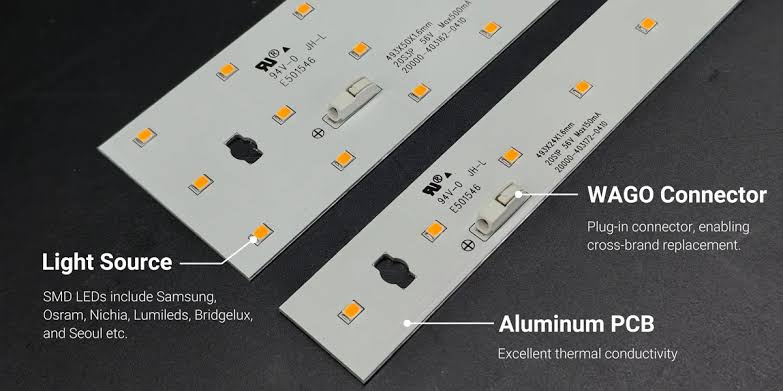
Модуль линейного светового двигателя распределяет дискретное устройство поверхностного монтажа. (СМД) светодиоды (такой как 2835, 3030, или 5630 пакеты) равномерно по вытянутому, печатная плата из жесткого алюминия или FR4 (печатная плата). Вместо концентрации светового потока в одной фокусной точке, линейная конфигурация распространяет свет по широкой оси. Современные производители светодиодных модулей предлагают легко настраиваемые линейные платы со встроенными разъемами push-in. (например, Терминалы WAGO или Molex) для плавного сквозного последовательного подключения по длинным архитектурным каналам.
2. Техническое сравнение: Линейные модули против. COB-массивы
В таблице ниже сравниваются модули линейных световых двигателей с традиционными модулями COB по ключевым оптическим модулям., термический, и механические параметры:
| Инженерное дело & Метрика производительности | Модуль линейного светового двигателя | COB (Чип на плате) Модуль |
| Геометрия источника света | Расширенный линейный массив (полосовая разводка печатной платы) | Концентрированный одноточечный круговой массив |
| Световая плотность & Блики | Распределенный выход с низким уровнем бликов; мягкий точечный свет | Очень высокая плотность света; нужна антибликовая оптика |
| Оптическое управление лучом | Широкий, однородные профили балок (≈ 120° родной) | Узкие и средние направленные лучи (15°–60° с линзой) |
| Профиль теплового рассеяния | Распределение по большой поверхности печатной платы, меньший тепловой поток | Концентрированный тепловой след; требует тяжелого радиатора |
| Механическая интеграция | Модульный; настраиваемая длина с вставными разъемами | Фиксированный круговой след; требуется держатель и отражатель |
| Основные типы светильников | Линейные подвески, жертвы, и архитектурные слоты | Встраиваемые светильники, трековые прожекторы, и высокие заливы |
3. Когда следует выбирать модуль линейного светового двигателя
В то время как модули COB доминируют в светильниках с направленным акцентом, а линейный модуль светового двигателя является очевидным техническим выбором для приложений, требующих отсутствия теней, непрерывный, и рассеянный свет с контролем бликов.
Матрица применения линейного светодиодного модуля для современных систем освещения
Линейные светодиодные модули обеспечивают гибкие решения освещения для коммерческих помещений., розничная торговля, музей, и архитектурные приложения. В различных средах требуются особые оптические характеристики и конструктивные решения для достижения стабильного качества освещения..
| Сценарий применения | Основные требования к освещению | Рекомендуемое преимущество модуля |
|---|---|---|
| Офисное освещение | Требуется униформа, малобликовое освещение, соответствующее требованиям UGR. | Линейные светодиодные модули обеспечивают комфортное освещение рабочего места со сбалансированным светораспределением.. |
| Освещение розничных проходов | Требуется непрерывное освещение без теней на длинных площадях дисплея.. | Специальные светодиодные модули обеспечивают постоянную яркость для улучшения видимости продукта.. |
| Освещение стен музея | Требуется мягкое непрямое освещение без видимых краев луча или резких теней.. | Рассеянная оптическая конструкция обеспечивает плавные переходы света при демонстрации произведений искусства.. |
| Архитектурное освещение | Требуются компактные конструкции печатных плат для тонких алюминиевых профилей и индивидуальных креплений.. | Низкопрофильные линейные модули обеспечивают гибкую интеграцию в современные осветительные конструкции.. |
Путем выбора правильной конструкции линейного светодиодного модуля, производители освещения могут оптимизировать визуальный комфорт, энергоэффективность, и гибкость установки в различных приложениях.
Освещение коммерческих офисов и учебных заведений
Современные стандарты рабочего пространства отдают приоритет низкому унифицированному рейтингу бликов. (УГР) цели для поддержания визуального комфорта. Линейные модули двигателей, покрытые опаловыми или микропризматическими диффузорами, создают равномерную, бестеневое освещение в плоскостях задач, что делает их отраслевым стандартом для утопленных трофферов., подвесные линейные подвески, и непрерывные щелевые огни.
Элитное окружающее освещение для розничной торговли и музеев
В средах, требующих плавного, непрерывные световые линии, линейные модули, оснащенные сквозными соединениями, устраняют темные пятна на соединениях плат. Их широкий угол луча создает мягкую окружающую среду, которая подчеркивает текстуру стен, не создавая резких, перекрывающиеся тени.
Дизайн архитектурного светильника с тонким профилем
Из-за тонкой компоновки печатных плат. (обычно варьируется от 10 мм до 40 мм в ширину), Изготовленные на заказ линейные световые двигатели легко вставляются в узкие алюминиевые профили. Распределенная тепловая нагрузка позволяет производителям светильников использовать алюминиевый корпус в качестве основного радиатора., значительное уменьшение веса и глубины приспособления.
4. Рекомендации по поиску и настройке для производителей светильников
Производители светильников и инженеры по светотехнике могут улучшить характеристики светильников, выбрав правильные характеристики светодиодных модулей.. Поэтому, производители должны оценить качество светодиодов, электрическая совместимость, и тепловые характеристики перед производством.
Выберите последовательное объединение светодиодов и высокую производительность CRI
Высококачественные линейные светодиодные светильники требуют стабильной согласованности цвета в нескольких модулях.. Поэтому, покупателям следует выбирать светодиоды с плотным биннингом по эллипсу МакАдама., например, варианты 2-этапного или 3-этапного SDCM.
Светодиоды с высоким индексом цветопередачи (CRI ≥90 и R9) >50 обеспечить более точную цветопередачу. Эта особенность особенно важна для архитектурного освещения., торговые помещения, и коммерческая среда.
Согласование электрических параметров с помощью светодиодных драйверов
Правильное соответствие напряжения и тока повышает надежность светодиодного модуля и упрощает сборку светильника.. Производители светильников должны работать с поставщиками светодиодных печатных плат, чтобы обеспечить соответствие прямого напряжения. (Вф) и рабочий ток с подходящими светодиодными драйверами постоянного тока.
Для расширенных линейных систем освещения, Последовательно соединенные модули могут уменьшить сложность проводки и повысить эффективность установки..
Выбирайте материалы MCPCB с высокой теплопроводностью
Управление температурным режимом напрямую влияет на срок службы светодиодов и поддержание светового потока.. Для мощных осветительных приборов, Подложки MCPCB с алюминиевым сердечником обеспечивают более быструю передачу тепла от соединений светодиодов.
Производителям следует рассматривать материалы MCPCB с коэффициентом теплопроводности ≥2,0 Вт/м·К.. Такая конструкция помогает снизить тепловое напряжение и обеспечивает долгосрочную работу светодиодов, а срок службы светодиодов превышает L80B10. 60,000 часы.
Линейный светодиодный светильник против модуля COB: Как выбрать
Выбор между линейным светодиодным светильником и светодиодным модулем COB зависит от требуемого распределения освещения..
Модули COB обеспечивают концентрированные лучи высокой интенсивности для таких применений, как прожекторы и направленные светильники направленного света.. В отличие, линейные светодиодные двигатели обеспечивают более широкое освещение, снижение бликов, и более равномерный световой поток.
Поэтому, линейные светодиодные модули идеально подходят для архитектурного освещения., офисное оборудование, жертвы, и системы непрерывного освещения. Они обеспечивают гибкий дизайн, эффективное управление температурным режимом, и простая интеграция в современные светильники.
ТОНХАН проекты изготовленные на заказ светодиодные модули печатной платы, линейные световые двигатели, и решения MCPCB для мировых производителей светильников. Наша команда инженеров поддерживает индивидуальные спецификации для удовлетворения различных оптических, электрический, и механические требования.
